Several good books have been written on what it takes to cultivate and solicit major gifts with generous donors. I recommend you go to Amazon for a comprehensive list. Also, you can attend any number of conferences offered by CASE or AFP to become more familiar with the best practices of executing a major gifts fundraising program.
This post is less about the "doing" of major gifts, and more about the essential "being" of major gifts fundraising professionals. I'm talking about qualities that you can cultivate and strengthen through deliberate practice.
The first two of these are listening and intuition. Good fundraisers develop and hone listening skills over time. Great
fundraisers listen at multiple levels and can tap into their intuition.
Listening. Transactional fundraisers typically only listen at Level I, or what I will call "the voice in their head." This is not a bad thing, and it comes in especially handy for telethon annual giving type work. The Level I voice in the head something like this: "I need to make this call and ask this donor to renew his annual $250 commitment." Done. Move onto the next call.
While Level I listening has its place, it will only take fundraising so far. This is why more mature fundraising professionals that engage in major gifts work learn to cultivate listening at Level II. Level II listing is when 80% to 90% of your attention is on the donor and what s/he is saying. It typically consists of a hard focus on the words coming out of the donor's mouth. During the 10% or 20% of the time you are speaking you might say something like this: "Donor what I hear you saying is...," or "Donor, what I notice is...." We call this "articulating" or reflecting back what the donor is saying for clarification and understanding.
Fundraisers who strengthen the ability to listen at Level II often (although not always) become very good major gifts fundraisers. Those that master Level III listening are nearly without exception the top fundraisers in our field. Level III listening involves panoramic awareness. It requires that you take in the entire environment. What is the donor's body language? How does the donor's facial expression change as s/he discusses his or her life and the impact s/he wants to have through philanthropy. How does the donor react to your open ended questions? How does the donor dress? What kinds of items in the home or office does the donor cherish? What emotion is coming through as the donor speaks with you (sadness, anger, joy, etc.)? Level III listening requires that you remain present, open, flexible, and non-judgmental as you engage with the donor. AND, it requires that you tap into your intuition.
Intuition. Intuition is the innate human ability to understand something (or somebody) immediately, without the need for conscious reasoning or data. Thomas Edison honed this ability. He claimed that his invention of the phonograph was an act of pure intuition. Great fundraisers regularly tap into their intuition and express their "intuitive hits" with donors. The expression may take this form: "My sense is that you're interested in....," or "I have a feeling that you'd really love..."
While we all have this ability, we often fail to use it. For me, intuition sometimes manifests as a visual image in my mind, a metaphor, a feeling, or just a word that pops into my head. In my coaching work, I've noticed that successful fundraising leaders often listen to these intuitive "feelings," while struggling leaders do not. Steve Jobs famously followed his own iconoclastic decision-making impulses. He implored his colleagues at Apple to "have the courage to follow [their] intuition."
If you are relatively new to the fundraising path (or just want to go from good to great), and are interested in strengthening the your ability to listen and use your intuition, then I encourage you to join me for the affordable Abundant Fundraising Webinar Series. The first installment of the series focuses on these two essential qualities of listening and intuition, both of which major gifts fundraisers must cultivate to be successful.
Showing posts with label intuition. Show all posts
Wednesday, February 24, 2016
Major Gifts Essentials I--Listening and Intuition
Wednesday, February 25, 2015
5 Reasons To Trust Your Intuition
#Intuition is a funny phenomenon. By definition, it is the innate the ability to understand something immediately, without the need for conscious reasoning. It usually shows up as a "gut feeling" or heartfelt sensation. For me, intuition sometimes manifests as visual images in my mind.
In a 2001 Harvard Business Review Article entitled: When To Trust Your Gut, Alden Hayashi explores the case for executives using intuition along with other highly developed analytical tools when making business decision. In nonprofit work, I've noticed that successful fundraisers often listen to these intuitive "feelings", while struggling fundraiser do not. Whether you are in a corporate or non-profit environment, here are five good reasons to trust your intuition:
1) It always knows best.
When drowning in data, your intuition will see the pattern from which to move forward.
2) It does not lie.
According to the intuitive genius, Mark Twain: "There are lies, damn lies, and statistics".
3) It will guide you perfectly.
Since intuition comes from a source that is beyond the rational/analytical mind, it is free from the "noise" that pollutes the signals.
4) It provides clarity.
Intuition is like the morning sunshine that burns off the accumulated overnight fog. When present, vision becomes clear.
5) It offers better decisions.
Steve Jobs famously followed his own iconoclastic decision making impulses. He implored his colleagues at Apple to "have the courage to follow [their] intuition".
In her 2012 book, Intuition and Psychic Ability, Jennifer O'Neill explores the subject in great depth from a nontraditional angle. Read it if you're brave enough to strengthen access to your own intuition.
In a 2001 Harvard Business Review Article entitled: When To Trust Your Gut, Alden Hayashi explores the case for executives using intuition along with other highly developed analytical tools when making business decision. In nonprofit work, I've noticed that successful fundraisers often listen to these intuitive "feelings", while struggling fundraiser do not. Whether you are in a corporate or non-profit environment, here are five good reasons to trust your intuition:
1) It always knows best.
When drowning in data, your intuition will see the pattern from which to move forward.
2) It does not lie.
According to the intuitive genius, Mark Twain: "There are lies, damn lies, and statistics".
3) It will guide you perfectly.
Since intuition comes from a source that is beyond the rational/analytical mind, it is free from the "noise" that pollutes the signals.
4) It provides clarity.
Intuition is like the morning sunshine that burns off the accumulated overnight fog. When present, vision becomes clear.
5) It offers better decisions.
Steve Jobs famously followed his own iconoclastic decision making impulses. He implored his colleagues at Apple to "have the courage to follow [their] intuition".
In her 2012 book, Intuition and Psychic Ability, Jennifer O'Neill explores the subject in great depth from a nontraditional angle. Read it if you're brave enough to strengthen access to your own intuition.
Thursday, December 11, 2014
Good Vibrations
Over the past couple of weeks, I've been exploring the topic of urges (not the reproduction variety) with a small group of exceptional leaders. During this time, I also immersed myself in an audio program entitled Trust Your Vibes by Sonia Choquette. In the program, Sonia fully unpacks what she calls "six sensory living", or living life by trusting one's urges, vibes, or intuition. While the program may be a bit "woo-woo" for many, it resonated with me (pun intended), especially in the leadership context.
Have you ever noticed great leaders who can make decisions with very little information? They go on instinct, gut feeling, or a hunch. That's six sensory leadership. Of course, one needs to have a very quiet mind, be aware, and listen for the vibrations that inform good choices. Also, one needs to be willing to ignore the rational/analytical mind which more often than not tends to countermand intuition. Not easily accomplished when many of us have spent years strengthening the left brain, and allowing the right brain to atrophy.
Not to worry. Like any body part that atrophies over time due to neglect or injury, we can recover use of a limb by going to the gym and exercising. In the case of our creative/intuitive selves we can also strengthen our sixth sense through practice (and and a good 12-step recovery program). Julia Cameron's Artist's Way is an excellent resource for such a recovery.
As I recover the the use of my own right brain, I am reminded of the 1966 single entitled Good Vibrations by the Beach Boys. It's an anthem for six sensory living. So go ahead, get quiet, listen to that small still voice inside you, and then take action from there. I expect you'll be amazed at the results. And always remember to "keep those lovin' good vibrations a happenin'.
Have you ever noticed great leaders who can make decisions with very little information? They go on instinct, gut feeling, or a hunch. That's six sensory leadership. Of course, one needs to have a very quiet mind, be aware, and listen for the vibrations that inform good choices. Also, one needs to be willing to ignore the rational/analytical mind which more often than not tends to countermand intuition. Not easily accomplished when many of us have spent years strengthening the left brain, and allowing the right brain to atrophy.
Not to worry. Like any body part that atrophies over time due to neglect or injury, we can recover use of a limb by going to the gym and exercising. In the case of our creative/intuitive selves we can also strengthen our sixth sense through practice (and and a good 12-step recovery program). Julia Cameron's Artist's Way is an excellent resource for such a recovery.
As I recover the the use of my own right brain, I am reminded of the 1966 single entitled Good Vibrations by the Beach Boys. It's an anthem for six sensory living. So go ahead, get quiet, listen to that small still voice inside you, and then take action from there. I expect you'll be amazed at the results. And always remember to "keep those lovin' good vibrations a happenin'.
Wednesday, August 6, 2014
Making A Mess
In the 1930's and 40's Oliver Hardy of the slapstick comedy duo, Laural and Hardy, was fond of saying: "Here's another nice mess you've gotten me into", after some calamity befell the pair.
And so it is that: "life imitates art far more than art imitates life"--Oscar Wilde
Recently, I've been discussing strategy formation and decision making in the context of data. It would appear that with the advent of the digital age our society is obsessed with data. There's BIG DATA, and little data. There are entire academic and professional fields of Data Analysis and Data Visualization. How on earth did the human race make any progress prior to data?
Here's how--intuition.
Intuition is that human ability to understand something immediately, without the need for conscious reasoning, or data. Thomas Edison had this ability. He claimed that his invention of the phonograph was an act of pure intuition. Other masters from antiquity to the modern age also possessed this great capacity--as do we all.
We've become so data-driven that we often get stuck in the paralysis of analysis. I will submit that nothing significantly innovative, creative, or entrepreneurial was ever accomplished by analytical, deductive reasoning. By definition, an act of creation is one of inspiration, not perspiration (except in bed, when it is both ;-))
People may ask: "how am I to decide without data?" The answer is: meditate. The mind is like a glass of water with dirt in it (notice DIRT = DATA). Stir it up (analyze) and you can't see clearly. Let it settle (meditate), and the mind becomes a crystal clear pool of water from which right action emerges.
More often than not, we make a mess of life when we do not listen to our intuition, or our inner knowing of what is right. When this happens and a decision goes sideways or south, I offer the advice my mom often shared with me in my youth: "clean up your #mess!"
And so it is that: "life imitates art far more than art imitates life"--Oscar Wilde
Recently, I've been discussing strategy formation and decision making in the context of data. It would appear that with the advent of the digital age our society is obsessed with data. There's BIG DATA, and little data. There are entire academic and professional fields of Data Analysis and Data Visualization. How on earth did the human race make any progress prior to data?
Here's how--intuition.
Intuition is that human ability to understand something immediately, without the need for conscious reasoning, or data. Thomas Edison had this ability. He claimed that his invention of the phonograph was an act of pure intuition. Other masters from antiquity to the modern age also possessed this great capacity--as do we all.
We've become so data-driven that we often get stuck in the paralysis of analysis. I will submit that nothing significantly innovative, creative, or entrepreneurial was ever accomplished by analytical, deductive reasoning. By definition, an act of creation is one of inspiration, not perspiration (except in bed, when it is both ;-))
People may ask: "how am I to decide without data?" The answer is: meditate. The mind is like a glass of water with dirt in it (notice DIRT = DATA). Stir it up (analyze) and you can't see clearly. Let it settle (meditate), and the mind becomes a crystal clear pool of water from which right action emerges.
More often than not, we make a mess of life when we do not listen to our intuition, or our inner knowing of what is right. When this happens and a decision goes sideways or south, I offer the advice my mom often shared with me in my youth: "clean up your #mess!"
Thursday, March 13, 2014
Gang Plank or Diving Board?
The stock market goes down precipitously; do you buy, or sell? You've been dating a beautiful person for two years; do you propose marriage, or break up? Your company offers you a promotion that includes relocation; do take the assignment, or stay put? Your friend invites you to participate in a business venture with him; do you accept the invitation, or decline? Another friend invites you to climb a mountain in the spring. Do you join her, or not? Your beautiful companion (whom you did marry) wants to start having children. Do you go for it now, or wait?
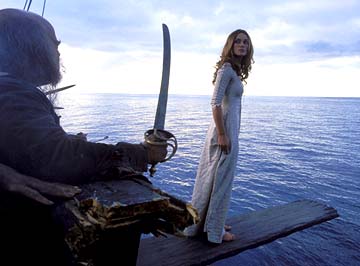
I could go on and on. It's as if we are often faced with walking out onto a precipice overlooking water. It can sometimes feel like a diving board that we voluntarily climb upon to execute a Triple Lindy into a warm pool of water. At other times it can feel as if you've been abducted by pirates, and you are being forced at the point of a sword to jump into shark infested waters.
Right now, I, and about 8 of my Co-Active colleagues are facing a similar transition. We just completed our 25 week certification program, taken our written exam, had our final call with our pod leader, and are each facing an oral exam in the coming months. During life transitions like these it can be helpful to access our intuition in order to discern if we're "walking the plank" or doing the "triple lindy"
When we tune into our intuition it’s like activating our extra-sensory perception. We FEEL if the situation is right for us. We notice what our body tells us.
THIS IS NOT STINK'IN THINK'IN!
We access our clear-knowing of what is right for us. It is only when we trust the images that we perceive in our mind’s eye that we can see the right path. If you're intuition has been beaten out of you by the industrial education complex, then working with a good Co-Active coach may help you regain your insight.
So, my friends, what's it going to be: "Gang Plank or Diving Board"
Labels:
co-active,
coach,
decision,
intuition,
transition,
triple lindy
Subscribe to:
Posts (Atom)