Tuesday, October 21, 2014

The Maple Leaf in the River


Recently, I sat beside a river in the Blue Ridge Mountains contemplating a time many autumns ago when the first people inhabited that fair land.  As I sat, visions of a few Braves moving through the country came to me.  One stopped to drink from a calm eddy by the bank across the river at the bottom of the steep slope studded with trees falling into color.

As the Brave slipped back into the underbrush, an urge welled up inside me to stand by the river for a few moments and observe.  I noticed several colorful leaves making their way downstream in the clear, clean water flowing past.  One leaf, a large maple, tumbled slowly in the swift current.  It was as if the leaf was cartwheeling across the river bottom.

It has since occurred to me:  what would it be like if we gracefully cartwheeled in the swift current of our lives?

Monday, October 6, 2014

The Monkey and The Organ Grinder

In the late 19th and early 20th centuries, a certain class of beggars known as "organ grinders" would walk the streets of large cities in America and Europe, plying crowds for small donations in exchange for entertaining them in public.  These street performers would carry large music boxes (organs) that were operated by turning a crank.  The grinder would often be accompanied by a monkey who would dance to the music, do tricks to entertain the audience, and then collect donations.

I was reminded last week of the Organ Grinder metaphor, as I danced to the music of several other maestros.  While putting a monkey on a leash and asking it to do tricks for money is now outlawed, the activity appears to be alive and well in the course of human events.

In a free society, it is still possible to dance to one's own music (should one choose to do so).  And, as Henry David Thoreau put it: "...step to the music which [you] hear, however measured or far away."  

Sadly, I lost sight of this sage advice last week as I was grinding it out.  Not Anymore!  As I begin anew, I am reminded to follow my own music, and I am prompted to ask:  

Whose Music Are You Dancing To?


Thursday, September 25, 2014

Three Steps Forward...

...Two Steps Backward.  This was the mantra as I attempted the nearly 18,000ft summit of Popocatepetl in the early 1990's before the volcano reactivated and became off-limits to climbing. 

After flying in from sea level to Mexico City (where we had a tense encounter with the corrupt "Policia" just as we departed the airport), we were on the great black ash heap that is the lower part of the climb within 24hours of arrival on our way to a small hut located at about 15,000ft. 

"Three Steps Forward, Two Steps Back, Three Steps Forward, Two Steps Back", "Three Steps Forward, Two Steps Back" was the drumbeat pounding in my head until we arrived at the hut just before sundown.  After a sleepless, fitful night filled with headache and nausea, we decided to descend at sunrise.  "Scree-skiing" down the ash heap was a much more enjoyable experience.

And so it is with our professional, personal, and spiritual lives.  There are metaphorical mountains to climb, and along the way it feels like we take three steps forward only to slide back two steps.  Furthermore, despite our best intentions, desires, and efforts to achieve a particular summit or goal, we frequently fail.  The most important question to ask at these times is: "what did I learn?"
   
In the case of my unsuccessful attempt on Popocatepetl, even though I had achieved the highest elevation in my early climbing days, my body was not ready to go farther.  I learned that prior to proceeding to altitudes over 12,000ft my body needs more time to acclimate.  Then, as now, I am reminded of the Dirty Harry (Clint Eastwood) quote from the 1973 film Magnum Force: "A man's got to know his limitations."  

Thankfully, after spending more time in and around the volcanoes near Mexico City, we achieved the summit of Pico De Orizaba (approximately 18,500ft) a few days later in a memorable ascent with a few good friends. 

So, I ask: what are you learning about your own limitations?

Tuesday, September 23, 2014

The Mountain Perspective

Mountains are sacred places.  In Greek mythology, Mount Olympus is the dwelling place of the gods.  In the Judeo-Christian tradition, Mount Sinai is the place where Moses encountered God and received his commandments.


The nature of mountains is elemental.  Earth (rocks), water (glaciers and streams), air (wind), and fire (lightning).  During the day, as the sun crosses the sky, the mountain sits.  Light, colors, shadows change moment to moment, and yet the mountain stays.  Clouds, fog, wind, rain, and snow may swirl around the massive peak; and when all is clear, there is the mountain.

On its surface, glaciers move, snow fields form and dissipate, boulders break loose from the freeze and thaw cycle.  At its base, streams and rivers flow.  And yet, through it all, the mountain is.

As we lead our lives, what is possible if we adopt the "mountain perspective"?  Can we embody the fortitude of the mountain in the face of everything that changes in our environment?  What is possible if we adopt the strength and stability of the mountain as the turbulence of our day-to-day existence attempts to push us this way and that?

Wednesday, September 17, 2014

What's Your Mission?

In the 1980 film The Blues Brothers Elwood (Dan Aykroyd) asserts several times that he and his brother Jake (John Belushi) are "on a mission from God".

The phrase refers to Elwood and Jake's quest to get their band back together in order to raise the $5k necessary to save the Catholic home where the boys were raised.  Being on a mission from God also reminds us that the boys realize their quest is bigger than the the two of them and the band.

This modern comedy is a favorite of mine as a story of redemption blended with blues music.  It also reminds me of my current "mission from God" which is to work with non-profit fundraising leaders so that they may more effectively lead their teams and raise more money for their organizations.

In life we often get mired in what Stephen Covey referred to as "the thick of thin things".  Having a mission, purpose, or destiny can be helpful in keeping clear of such muddy swamps.

So, what's your mission?

Tuesday, September 9, 2014

Hope

I was recently reminded by a colleague of the heartfelt final scene of 1994 film Shawshank Redemption in which Red, after having been released from prison, is on his way to see his friend Andy in Zihuatanejo, Mexico (A place I coincidentally visited in the 1990's).

Red had chastised Andy earlier in the film for being hopeful about an eventual release indicating that: "Hope is a dangerous thing. Hope can drive a man insane."

As he rides the bus southward, Red now reflects to himself:

"I find I'm so excited, I can barely sit still or hold a thought in my head. I think it's the excitement only a free man can feel, a free man at the start of a long journey whose conclusion is uncertain. I hope I can make it across the border. I hope to see my friend and shake his hand. I hope the Pacific is as blue as it has been in my dream. I hope."

As I start out on my own journey with an uncertain conclusion, I share Red's excitement and anticipation.  And like Red, I hope I can make it.

So, what in your own life are you hopeful for?


Friday, August 29, 2014

What Kind of Leader Are You?

Throughout history, one signature of great leaders is that they possessed a moral compass.  Sadly, today we find many leaders in the public, private, and nonprofit sectors lacking the virtuous lodestone necessary for the compass to point toward true magnetic moral north.  Instead, we see so called “leaders” whose compass needles appear to point only toward themselves in what we might refer to as a culture of narcissism. 

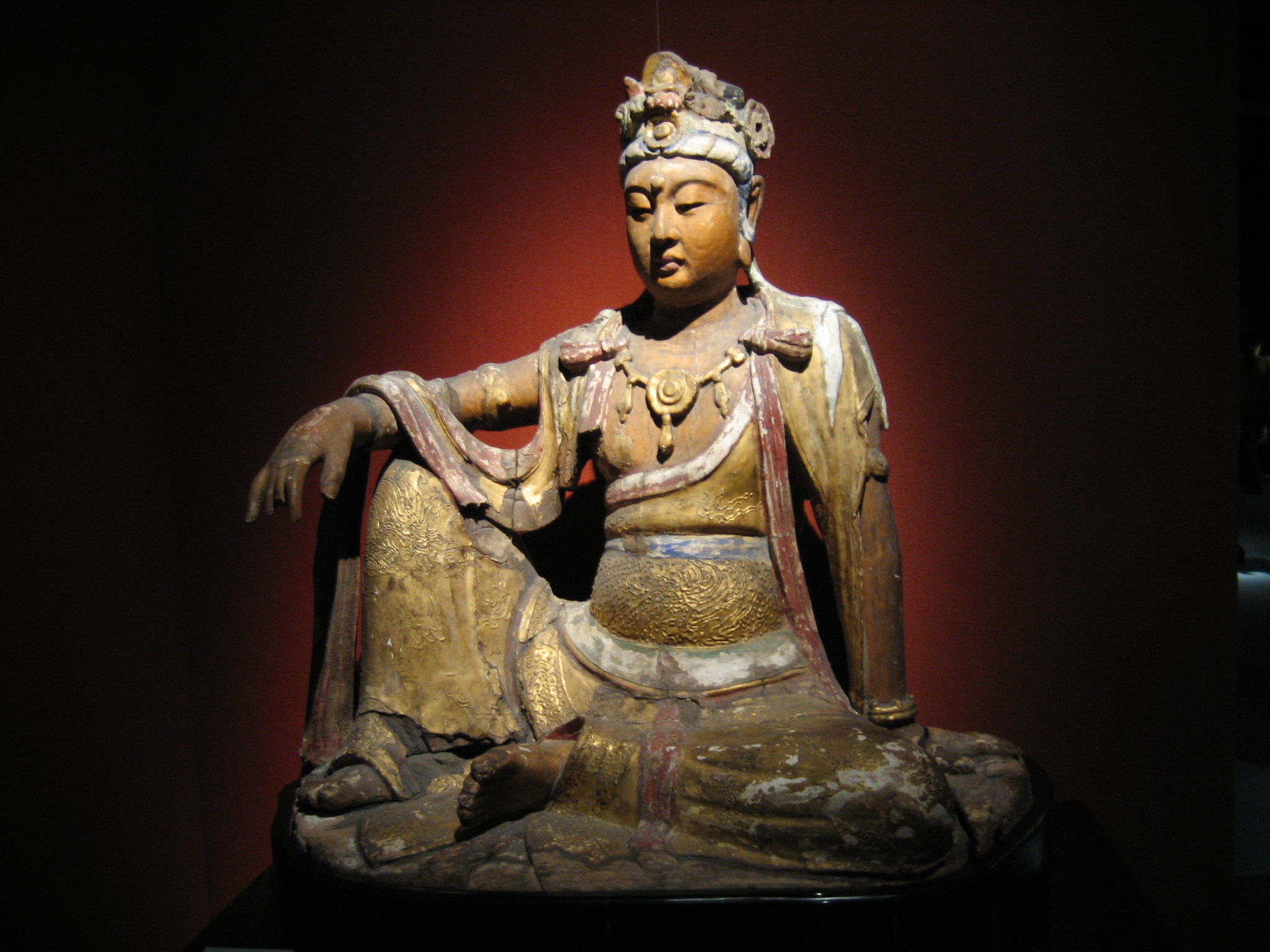
In contrast, from the Buddhist tradition we have a fine example of leadership to emulate in the path of the  Bodhisattva, or anyone who is motivated by great compassion to achieve enlightenment, not for his own benefit, but for the benefit of others.  In the Mahayana teachings, there are three metaphors that describe Bodhisattva leadership, and they are: 1) The Monarch, 2) The Ferryman, and 3) The Shepherd.


The Monarch as Leader
The Monarch is a leader who gathers and uses power solely for the benefit of his or her subjects.


The Ferryman as Leader
The Ferryman is a leader who has the primary orientation of “we’re in the same boat” and brings great empathy and understanding.


The Shepherd as Leader
The Shepherd is a leader who will put the welfare other people before himself.


So, which kind of leader are you, or do you strive to be?