Friday, November 15, 2013

Appreciation

"What you appreciate, appreciates"--Lynne Twist, The Soul of Money.

This week, I was working with Graham Coppin and Heather Berry on appreciation.  I am grateful to both of them for the coaching. Heather provided the motivation for this blogpost, and Graham has me working in the "appreciation gym" so that I can strengthen those muscules.

Appreciation.  What is it?  The definition of which I am most fond is: "the recognition and enjoyment of the good qualities of someone or something".

While I appreciate many people, places, and things in my life, I had lost sight of my own divinity a long time ago.  It's as if the veil of illusion (or Maya) was blocking my clear seeing of the truth.  As a consequence, I was not appreciating the good I bring into this world.  I'm in the process of reversing that error (or sin), and if Lynne Twist's assertion is true, then more good will be forthcoming.  Watch out world!

I want to be careful here.  I am not suggessting that I (or we) follow the lead of Narcissus, who was so enamored by the reflection of his own visage that he became paralzed by the reflecting pool, withered away, and died.  No.  I am suggesting somehting much more nuanced and balanced.

Here again, I'd like to return to Lynne Twist.  She suggests that we can use appreciation as a powerful, intentional practice by paying deliberate attention to not only to what we do and have, but also to the good that we are. In this way, I intend to bring my own attention to, and reflection on, the good that I am (and that I do), so that I may enlarge and enrich my own experience, and that of those with whom I interact.

Who and what are you appreciating these days?

Friday, October 25, 2013

Errors, flubs, and gaffes

In the course of human events, individuals sometimes make mistakes, even professionals who are at the apex of their careers.  More often than not, these errors are are a consequence of acts of commission derived from good intentions.  As leaders, how are we to react or respond when a team member or subordinate fumbles the ball, drops a pass, or misses a block or tackle?

Before answering that question, I believe it is important to make a distinction between excellence and perfection.  Excellence is that quality of being outstanding or extremely good, whereas perfection is that quality of being free from all flaws or defects.  Certainly, striving to be flawless is one sign of excellence.  However, being flawless is rarely, if ever possible.  For the sports enthusiasts among you, consider Derek Jeter, the NY Yankees short stop for past nineteen seasons.  He is a five time world series champion and five time golden glove award recipient, as well as a all-star selection in thirteen of his nineteen professional seasons.  Derek Jeter is regarded as one of the best short stops in the history of baseball.  And yet, he is not perfect.  Over the course of his nineteen year professional career, Jeter committed, on average, 13 errors each season.

Turning to a scientific, rather than athletic view on the subject, there are many who would argue that being flawed is the essence of being human.  Modern genetics tells us that infinitesimally small variations (or coding errors) in DNA are at the heart of evolution, and these "mistakes" are responsible for the variety, complexity, and beauty of all living organisms. Most (if not all) contemporary evolutionary biologists tell us that without random error in the genetic code we would not exist.

So, back to leadership, and the question as to how we should deal with mistakes made by those under our care and supervision.  Certainly, it is helpful to point out errors, explain the impact, and ask that the same error be avoided in the future.  In addition, it may be helpful to recall what Alexander Pope, the eighteenth century English poet, wrote on this subject in his Essay on Criticism: "To err is human; to forgive divine."


Monday, September 30, 2013

The Blue Bird in the Barnyard


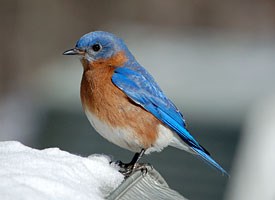
http://www.allaboutbirds.org/guide/PHOTO/LARGE/eastern_bluebird_glamor.jpgDan Millman is his book No Ordinary Moments relates the story of the Bluebird in the barnyard.  
In this tale, a bluebird stays behind as his family and friends fly south for the winter believing the journey unnecessary.  As the cold encroaches, the fragile bluebird realizes that he's made a terrible error.  In an attempt to head south, the bluebird takes to the air, only to have his wings freeze in flight causing a perilous fall back to earth.  

As fortune would have it, the frozen bluebird lands on a haystack in a barnyard.  He rolls to the barnyard floor near a group of cows. Just as the heart in the lifeless body of the bird was about to beat its last beat; one of the cows relieved herself on him.  The warm manure covers and warms the bird, saving his life.

The bluebird thaws out, and happy to be alive starts to sing a beautiful song, which attracts the attention of the barnyard cat.  The cat saunters over, sorts through the manure, finds the little bird, and promptly eats it.


The fable offers at least three morals:


1) Not everyone who dumps on you is your enemy.

2) Not everyone who gets you out of a mess is your friend.
3) If you are warm and happy in a pile of manure, keep your mouth shut.

Friday, September 27, 2013

Double, Bubble, Toil, and Struggle


"Consider the lilies of the field, how they grow: they neither toil nor spin, yet I tell you, even Solomon in all his glory was not arrayed like one of these."-- Matthew 6:28-29
I've been absent for a while.  In the inimitable words of Russell Casse in the film Independence Day, "Hello Boys, IIII'mmm baaaaccckkkk!"
Recently, one of my saboteurs has been showing up telling me there's not enough time for everything in life (including these blogposts).  That's why you've not heard from me in a while.  The truth is--time is an illusion.  Certainly, as Eckhart Tolle puts it (paraphrase): We may use clock-time for practical purposes, but there is no future and no past.  There is only the now.
I'd lost sight of this fundamental truth.  Life evolves moment to moment, and as much as we attempt to schedule every moment using clock time, that technique inevitably leads to frustration, anxiety, and disappointment.  It's better to enter the river of life and go with its flow.
Through some excellent coaching from Graham Coppin,  a better perspective for me is emerging from within.  That is, be like the lilies of the field, and toil not.    
Which perspective on life do you prefer: toiling and spinning, or flowing and swimming?

Wednesday, July 3, 2013

Venturing Forth

In Homer’s Odyssey our hero, Odysseus, struggles on a long journey home to his family in Ithaca after having spent ten years in a foreign land fighting the Trojan War.  The ten year journey home is replete with trial and tribulation.  Odysseus did reunite with his family, and most modern storytellers would have left it there and sold the movie rights.  Yet, Homer does not.  Odysseus is called forth again to fulfill the prophecy uttered by the ghost of the blind seer Tiresias.  


Odysseus must take a well made oar and carry it inland to a country where the people have never heard of the sea.  Upon arrival in this new country, a wayfarer will greet Odysseus and comment on Odysseus’ “winnowing shovel”, since boats and oars would not be familiar to people in this foreign land.  Upon hearing this, Odysseus will plant his oar in the ground and make appropriate sacrifices to the gods.


Odysseus’s life story falls into a category of universal hero myths that can be found in cultures and civilizations spanning history.  The key points of the story include the hero venturing forth seeking adventure, fame, and fortune in the early part of life, returning home, and then being called forth again in the latter part of life with a new purpose.  The burying of the oar and the sacrifices to the gods are wonderful metaphors illustrating that the journey into the latter part of life cannot be accompanied by the tools which helped navigate the early part of life.  Fr. Richard Rohr beautifully describes this shift his book Falling Upward: A Spirituality for the Two Halves of Life.


The Odyssey resonates with me as metaphor for my own life. Many of you who know me recognize that I am often fond of saying that “I’m on the return journey.”  As with Odysseus, I grew up on an island by the sea, ventured forth in the early part of life seeking adventure and fortune, and returned home to be with family.  To extend the metaphor, I can share that I am now setting out on another journey (both inner and outer) with winnowing fork in hand, seeking to separate the wheat from the chaff before my bones return to the earth.  And, what an adventure it will be!

For those of you who find yourselves in similar circumstances, what are you being called forth to be or do in the second half of life?

Thursday, June 13, 2013

Authority

Recently, I received a pithy pearl of pragmatic coaching from Marjorie Melzer.  Marjorie and I were discussing the topic of accepting critical feedback, and my discomfort over the years with authority figures.   Marjorie challenged me to do some mindstorming and journaling about the subject--which I did.  She also encouraged me to look for the “gift (s)” that that authority had to offer--I found several.

Since my primary value in life is freedom/liberty I am often, skeptical, critical, and even a bit irreverent about institutionalized power.  So, I did a little research.  It turns out that the word authority is derived from the Latin word auctoritas, meaning invention, advice, opinion, influence, or command.  In philosophy, authority refers to a claim of legitimacy, or the justification and right to exercise power.  

The results of this research were insightful. The “advice and influence” aspects of authority gave me a new perspective.  These were the gifts that I found through the mindstorming/journaling exercise.  The legitimate exercise of power also resonated with me.  In my own circumstances, it is no small irony that I exercise parental authority within the family, as well as informal/formal authority of leadership in my small team at Princeton.

What I discovered through through exercise is that gifts often far exceeded the discomfort.  That said, in a free society a strong dose of skepticism about the exercise of institutionalized power is healthy.  I’ll tone down the irreverence.

Thursday, May 23, 2013

The Weed Perspective

Recently, I was working with Joe Timmins in order to explore the possibility of generating more business.  We discussed several different perspectives  including:  patience, scarcity, abundance, and uncertainty.  One perspective we hit on was growth.  We called it the “weed perspective”.


Now to some, the “weed perspective” may sound a bit strange, however, it resonated with me.  Joe and I talked about the fact that while we all love flowers; weeds grow and flowers wilt.  In fact, those you who tend a lawn or a garden know that weeds proliferate!  Imagine a world where your business proliferated like weeds.


Joe and I further explored how one can be around generating business from the weed perspective, as well as what one could do from that viewpoint.  Here are some of the ideas we generated in a fun, no-holds-barred, brainstorming session:


When generating business, some of the ways one can be:
-Beautiful
-Gnarly
-Plentiful
-Attractive
-Rooted
-Wild
-Fee


And, when generating business, some of the things one can do include:
-Multiply
-Grow
-Spread-out
-Pop-up
-Surprise


Well, you get the picture (and if you don’t, just go out to your backyard and look around).  The point of an exercise like this is to rattle the mental cages in order to get unstuck from a particular way of seeing a situation.  By working with someone to examine different perspectives around a particular problem, and by selecting a perspective that resonates, sometimes new ideas can be generated, and it is becomes possible to make choices that were previously unavailable.


After all, what is a weed?  In the words of Ralph Waldo Emerson, it is “a plant whose virtues have never been discovered.”